


Everything You Wanted to Know About Witches, Part 1: FAQs About Witches
Updated: 2 hours ago

A witch can be a healer, a sorcerer, a neighbor, a rebel, a priestess, a fraud, a friend or a murderer. Few figures in mythology and folklore can carry such weight. Tales of witches have accumulated in almost all cultures in oral traditions, fairytales, village gossip, accusations, court records, religious sermons, plays, books, and horror films.
Here, we examine the origins and folklore surrounding witches and their magic—both the light and dark varieties. We start this witch series with a FAQ—frequently asked questions—about witches, sorcery, etymology of witch, cats, broomsticks, staffs, wands, and other lore. Then we'll explore the historical origins of witches in Part 2. We'll uncover the disturbing side of witches, especially of past witch hunts and trials, for Part 3 to conclude our series about witches.
FAQs About Witches
What is a witch?
Witches are people, especially women, who practice magic—or are believed to practice magic by the community in which they live—to influence events, cause harm, or effect change. Witches are often thought of as having innate abilities.
What is magic?
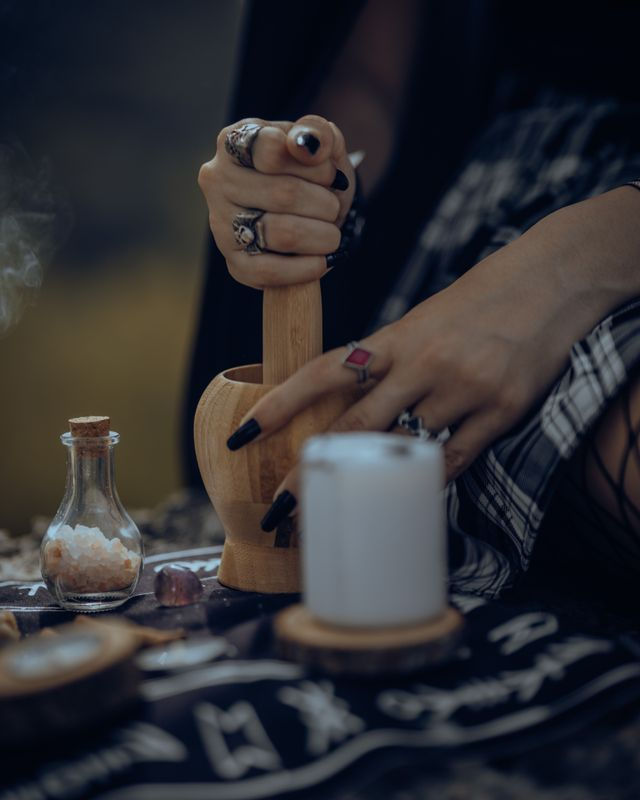
Magic is the use of ritual actions, objects, words, spells or substances to influence people, events, or natural forces through supernatural, spiritual, or hidden means—whether for protection, healing, harm, cursing, love, or divination.
Magic is humanity's direct participation in and connection with the universe, according to Professor Chris Gosden, an Oxford archaeologist. This definition is much broader as Gosden further divides magic into two categories: the aims of magic—why it is used—and the technologies of magic—how it is performed (Gosden, timestamp, 5:02, 16:31, 17:03).
What is witchcraft?
Witchcraft is the practice of magic by a witch. It is a belief system defined by culture in which certain people, usually with inherited abilities through the use of magic, produce a supernatural outcome or cause harm.
Yet the meaning has changed over time. In early English, it originally meant divination and healing. By the Middle Ages, witchcraft came to mean the practice of magic to cause harm, particularly by women. From the 1400s and on, witchcraft was believed to be participating as members in a devil-worshipping sect. In modern times, witchcraft often refers to a nature-based spiritual practice, such as in the modern Wicca, which is commonly considered unrelated to devil worship.

What is drycraft?
Drycraft is an old English word drycræft for "magic" or "sorcery," meaning "the craft of a dry." The word dry is borrowed from the Celtic word for a druid—thus, drycraft originally meant "druid-craft." Anglo-Saxon churchmen often condemned it along with witchcraft.
Where does the word witch come from?
The word witch is derived from the Old English wicca (male sorcerer or wizard) and wicce (female magician or sorceress), related to the verb wiccian, meaning "to practice witchcraft." Additionally, these Old English words may be linked to the Old English wigle (meaning "divination") and wig or wih ("idol"). Wicca may be connected to a Proto-Germanic word wikkjaz (meaning "a necromancer—one who wakes the dead") ("Origin and history of witch," etymonline.com; "weg-" entry, #4 meaning, The American Heritage Dictionary Indo-European Roots).
What is a sorcerer?

A sorcerer is an individual who conjures "spirits" using magical divination; alternately, sorcerer refers to someone who learns magical techniques from books or other means and uses magic to discern fate, control events, or harm others. The word comes from the Old French word sorcier, based on the Latin sors, meaning "lot" or "fate," as "used in divination" and in casting lot ("sors" entry, Oxford Latin Dictionary, p. 1795). The word developed into sortarius in Late or Medieval Latin to mean someone who tells fortunes by casting lots ("sorcerer", etymonline.com).
What is sorcery?
Sorcery is the intentional practice of learned magical techniques—can be potions, spells, rituals, or objects—to influence events, people, or outcomes. The word comes from the Old French sorcier, based on the Latin sors, meaning "lot" or "fate." Over time, sorcery came to mean magic in general, particularly harmful or black magic. In many ancient languages, sorcery was closely tied to poison: the Greek pharmakeia (the root of "pharmacy") meant both "the use of drugs" and "magic".
Why are sorcery and poison so closely linked?
In several ancient languages, the same word meant both "magic" and "medicine." The Greek word pharmakeia, in Galatians 5:20, means the use of drugs or potions. English Bibles translate it as "sorcery" or "witchcraft." It is also the root of the word pharmacy. Latin has the same double meaning: the word veneficium means both "poisoning" and "causing harm by magic."
Other ancient languages with the same dual meanings are Old English (lybb—meaning "a drug, poison, or charm"; lybcræft—meaning "sorcery or witchcraft"; lyblæca—meaning "sorcerer"), ancient Egyptian (heka—meaning "magic"; hekas were often performed as spells in tandem with medicine), and ancient Sanskrit (bheṣaja—meaning "medicine" and "a healing charm"). This lack of differentiation between the two meanings makes sense given that the sorcerer's tools often included real plants and potions.
How is a sorcerer different from a witch?
The two words are often used interchangeably, but scholars have made three main distinctions. First, among the Azande people of Central Africa, witches often possess an inborn power, whereas sorcerers usually learn magical techniques using objects, medicine, and spells, according to anthropologist E. E. Evans-Pritchard (Evans-Pritchard, Witchcraft, Oracles and Magic Among the Azande, p. 387). Second, in European tradition, sorcery was practiced mostly by educated men (often called sorcerers, magicians, or necromancers), while witchcraft was associated mainly with women and folk practices. However, the words themselves were not restricted to gender, as men were also accused of witchcraft and women could be called sorceresses.
The third and most important difference is how the Christian church viewed them. For most of the Middle Ages, sorcery was treated as an individual crime or sin. In the late 1300s, inquisitor Nicholas Eymerich argued that sorcery involved a pact with demons, making it heresy. In the 1430s, Friar Johannes Nider described witches as members of a secret, mostly female, devil-worshipping sect. In short, among witch-hunters, a sorcerer was an individual who practiced magic, while a witch was part of a satanic conspiracy—a big reason why the witch hunts became so deadly.
What is a necromancer?

A necromancer is someone who practices the art of summoning the dead to foretell the future or request advice. The word comes from the Greek nekros (meaning "dead body") and manteia ("divination"). In the Middle Ages, necromancy came to mean conjuring demons through learned rituals. Today, it mainly refers to raising the dead.
What was the Malleus Maleficarum?

The Malleus Maleficarum, meaning "hammer of witches," is a three-part book published in the late 1480s by Dominican inquisitors Heinrich Kramer and Jacob Sprenger as a guide to identifying, hunting, and punishing witches. Historian Brock explains that Kramer wrote it partly out of anger after his witch trials in Innsbruck were shut down (Brock, “Historian Answers Witchcraft Questions", timestamp 12:51).
In Part 1, the authors' misogynistic stances shine throughout their warnings and assertions about witches—the authors' theological theory. Kramer portrays witches as women who can't control their tongues, being extremely "carnal" or lustful. According to Brock, Kramer was extremely obsessed with labeling women as carnal (ibid.). "Young girls" are "more given to bodily lusts and pleasures ... working through their carnal desires and pleasures of the flesh" (CamiiW, "I Read 'The Witches' Hammer' So You Don't Have To!" timestamp 18:08). Additionally, women are "found to be given to superstition and witchcraft" by their "inherent nature" (ibid., timestamp 5:00). Women tend to give in to this "kind of perfidy [treachery]" than men are. Women are theorized as having intrinsic magic to them—having an "unseen energy," much like magnets (ibid., timestamps 5:05). Midwives, in particular, are branded as witches and scorned for their work (ibid., timestamp 7:00, 7:50). Lurid folklore of demon sex are further described in this section.
In Part 2 of the Malleus, we are given more sensational folklore illustrating and/or supporting the assertions made about witches. The sexual, pornographic nature of the folklore may be why the book's popularity became so popular (Brock, timestamp 14:14). Tales of men not being able to procreate, of suffering impotence, and of losing their "members" to a group of witches are among some of the book's bizarre collective lore. For Part 3 the inquisitorial methodologies are promoted to eliminate witchcraft—how to properly conduct witch trials, gather evidence and extract confessions (through torture), and exterminate witches, often by burning (Sledge, "Witchcraft - Malleus Maleficarum," timestamp 25:35+; CamiiW, timestamp 50:47+).
Dr. Sledge, in agreement with Brock and CamiiW, calls the Malleus Maleficarum "blatantly misogynistic" in its "depiction of diabolical heresy." The Malleus promotes the "systematically misogynistic theory of why women are more prone," due in small part to the false etymology of the word feminine being a contraction of the words fides with minus, meaning "without faith" or "lacking faith," as applied to women (Sledge, timestamp 18:55+). This etymological theory of the Malleus is utterly false, as feminine is derived from Old French femenin, meaning "feminine, female" and is in turn, derived from the Latin femininus which is taken from femina, meaning literally "she who suckles" (etymonline.com).
What was the first illustrated book about witchcraft?
It was the book De Lamiis et Phitonicis Mulieribus ("Of Witches and Women Fortune Tellers"), published in 1489 by German lawyer Ulrich Molitor (Rizzo, Johnna. “How Broomsticks, Cauldrons, and Pointy Hats Became Essential Witch Gear”). Molitor was actually skeptical and wrote it partly to challenge the Malleus Maleficarum, but his woodcuts of witches at a cauldron and flying on a pitchfork were reprinted so widely that they ended up reinforcing the beliefs he wanted to debunk.
How many people were executed for witchcraft?
Before 19th century, historians estimate around 100,000 people were prosecuted, and 40,000 to 60,000 were executed. More than three-fourths of the total number were women. This covers the early modern witch trials, which took place in Europe and the Americas from the 15th to the 18th century ("Early Modern Witch Trials," Britannica). The figures above do not cover any other region in the world.
The exact number of executions, however, will never be known because many court records were lost. That is partly why even among scholars and researchers, the death count differs widely.
How did artists help create the witch stereotype?

Art historian Linda Hults argued that the witch became a recognizable art genre in the early 1500s (Hults, pp. 14, 56, 73), with standard images like those in Albrecht Dürer's The Witch Riding Backwards on a Goat (circa 1500), where we see a witch riding a goat backwards, and other illustrations of witches riding broomsticks, dancing around a cauldron, and their preparations for a flight to a witch's sabbath.

Young artists like Albrecht Altdorfer, Hans Baldung Grien, and Niklaus Manuel Deutsch, created inventive, attention-grabbing witch images to build their reputations (ibid., pp. 61-62). Baldung Grien used the witch theme extensively in his works, making some of his witches younger and in erotic poses, probably intended for a smaller male audience (ibid., pp. 23-25). Critical images of witches fit what the church approved of, often helping the young artists win patrons in their careers.
How did the printing press shape the image of the witch?

Historian Charles Zika asserts that witchcraft imagery spread mainly through print, and that this increase in the 1490s was tied to the rise of witch trials. Printed works on witchcraft, such as Johannes Tinctoris's Traité du crime de Vauderie (1460) with an illustration of Waldensians worshipping the devil and flying in the air on wooden sticks, the Malleus Maleficarum (1486), and the woodcut-illustrated De Lamiis et Phitonicis Mulieribus (1489), spread the written folklore of witchcraft across Europe (Rizzo, “How Broomsticks, Cauldrons, and Pointy Hats Became Essential Witch Gear”). HistorianBrock supports the notion that printed books spread the same witch ideas across Europe and the colonies (Brock, “Historian Answers Witchcraft Questions", timestamp 7:05).
Meanwhile, in the early 1500s, artists such as Albrecht Dürer, Niklaus Manuel Deutsch, and especially Hans Baldung Grien, created a new iconography of witchcraft, emphasizing female lust and witches overturning social and moral order. They developed visual witch tropes that spread rapidly through circulation and copying of woodcuts and drawings (Zika, pp. 2-5).
Why do witches wear black?

In most of Western culture, black symbolizes the devil, evil, and sin (Pastoureau, pp. 38-40, 46-47, 50-52; Russell, pp. 68-69). It is also linked with death and mourning, which dates back to ancient Rome, where a dark toga is worn for mourning (Pastoureau, p. 35).
Witches in black gowns started appearing in the 19th and 20th century. Costume parties and annual Halloween masquerades grew in popularity during the 1920s and 1930s in the U.S. (Rzesa, "Why Halloween Costumes Like Witch, Ghost and Vampire Have Endured"). Likewise, the black witch costume with the pointed hat gained prominence too, due to its easy recognizibility and simple design. So, while the color symbolism is old, the black-clad witch is a fairly modern development.
When did the modern witch stereotype (pointy hat, broom, cauldron) come together?

Witch iconographic elements merged together gradually in Europe, influenced by the spread of the printing press from the 1400s and 1500s (Rizzo, “How Broomsticks, Cauldrons, and Pointy Hats Became Essential Witch Gear”). The first known picture of Waldensian women flying on broomsticks appeared in a French poem "Le Champion des Dames" by Martin le Franc in 1451. Ulrich Molitor's 1489 Latin book, De Lamiis et Phitonicis Mulieribus ("Of Witches and Women Fortune Tellers"), showed woodcut images of shape-shifting witches riding a forked branch or stick and witches at a cauldron.

Shakespeare's play Macbeth (1606) further cemented this cauldron link with witches in the public imagination. In Act 4, three witches add strange ingredients to a boiling pot while chanting the infamous spell: "Double, double toil and trouble; / Fire burn and cauldron bubble..." This chant is still quoted today, especially during Halloween (Yuko, “Why Do Witches Wear Pointy Hats? The History Behind the Costume”).

The printing press played a significant role in disseminating and solidifying these witch stories and horrid images in the public perception (Baker, "Witch Perspectives: Burning Down the Old Standards"). Scholar Justin Sledge notes that six of these demonological woodcut images in De Lamiis et Phitonicis Mulieribus had an enormous impact on European culture, especially among illiterate people. These woodcut images were "foundational" in "informing the visual representation" of witches, lingering in significance to this day (Sledge, "The Witch and Witchcraft in Popular Demonology", timestamp 20:21).
The pointy black hat, a staple of modern witch iconography, came later. One theory links it to the Judenhut ("Jew's hat")—a tall, pointed hat associated with Jewish men in medieval Europe. After 1215, due to a papal decree, Jews were forced to wear this hat in certain areas of Europe. Similarly, people convicted of sorcery in Hungary wore "peaked Jews' caps" in public because of a law that had passed in 1431 (Rizzo, “How Broomsticks, Cauldrons, and Pointy Hats Became Essential Witch Gear"). During these times, "medieval heresy hunters" accused European Jews of superstitious worship rituals, sexual degeneracy, cannibalism, and harming children (the "blood libel") (Sledge, “What is a Witch & Witchcraft?", timestamp 14:00-15:30).

This pattern of scapegoating continued with the same accusations used against the Jews, now applied to witches. As a result, pointed hats began showing up in English images of witches by the late 1600s and 1700s. But the hat truly became a standard part of the witch's image in the 19th century.
The full witch look was completed by the Victorian age, when illustrations and Halloween cards depicted old witches with tall black hats, big noses, warts, and black cats. Twentieth-century America finalized it through Halloween costumes, Disney's Snow White (1937), and The Wizard of Oz (1939), adding green skin to the classic image. In short, the witch's tools date back to the 15th century, but the complete ensemble is only about 100 to 150 years old.
Why do witches wear black pointy hats?
Refer to the 4th paragraph in the answer to the question directly above. A few more hat theories will flesh out the answer more.

One theory is that tall stiff hats were trendy in the 1600s, especially among the Quakers, according to Abby Cox, a dress historian (Yuko, “Why Do Witches Wear Pointy Hats? The History Behind the Costume”). It later went out of style. The hats did survive among older, poorer women—the same people most often suspected of witchcraft. The pattern of antisemitic prejudices being mixed with witch hatred had already happened, making the natural progression of portraying Quakers as witches an "efficient" narrative—hence the transference of the common female Quaker ensemble of pointed hats, aprons, and high-heeled shoes to witches, asserts Vi, a fashion historian, and historian Amelia Mott Gummere, author of The Quaker: A Study in Costume (1901) (ibid.).
Another popular theory links it to alewives, women who brewed and sold ale. These women supposedly wore tall hats, stirred cauldrons, and kept cats. Historians consider the evidence for this link weak.
Where did the idea of witches flying on brooms come from?
The first known image of women in broom flight appeared in French poet Martin le Franc’s "Le Champion des Dames" poem in 1451 (Bailey, Historical Dictionary of Witchcraft, "Brooms" entry). In the De Lamiis et Phitonicis Mulieribus ("Of Witches and Women Fortune Tellers") book by Ulrich Molitor (1489), an woodcut illustration of three shape-shifting witches riding a forked stick is significant in linking witches to broom flights.

Some believed witches needed to apply ointment to themselves or their brooms in order to fly. These magical ointments or potions were supplied to them by the devil at the witches' sabbath (Bailey, Historical Dictionary of Witchcraft, "Brooms" entry).
Historian Mikki Brock explains the broom in two ways. First, it's a common household object that many women. Most crimes blamed on witches involved harm to the home: children, food, and crops. Second, the broom was seen as a phallic symbol, which reinforced the belief that witches had sexual relations with the devil (Brock, “Historian Answers Witchcraft Questions").
What did witches supposedly ride besides brooms?
It could be almost anything. Writer Johnna Rizzo reported of a 1644 Scottish trial in which accused witches were described as riding a cat, a rooster, a hawthorn tree, a bundle of straw, and an elder tree (Rizzo, “How Broomsticks, Cauldrons, and Pointy Hats Became Essential Witch Gear”).

Artists showed witches riding pitchforks, wolves, and goats, including Dürer's famous Witch Riding Backwards on a Goat (1501), which symbolized the witch inverting the natural order. The goat symbolized the devil and lust ("Witch Riding Backwards on a Goat: Overview," Museum of New Zealand).
The Italian artist Agostino Veneziano created Lo Stregozzo (The Witches' Procession, circa 1520), an engraving showing a witch riding an animal skeleton alongside children and naked men.
Why do witches in cartoons have big noses?
The oversized hooked nose comes mainly from antisemitic caricatures. Brock notes that the witch stereotype repeatedly borrowed from earlier prejudices against Jewish people, such as the false blood libel accusing Jews of harming children (Brock, “Historian Answers Witchcraft Questions").
Why do witches have green skin?

It is a recent development, thanks to Hollywood. According to Professor Katherine Walker, witches weren't associated with green skin until the 1939 film The Wizard of Oz. The original The Wonderful Wizard of Oz (1900) book never mentioned the Wicked Witch's skin color. MGM wanted as much color as possible to show off Technicolor and contrast with the sepia scenes in Kansas. So the witch's skin was made green. Before that, most witches were drawn with pale skin, although some Halloween postcards showed them with red, orange, or yellow faces (Yuko, “Why Do Witches Wear Pointy Hats? The History Behind the Costume”).
What is the blood libel?
The blood libel is a false accusation lodged against Jews, claiming they murder Christian children to use their blood in religious rituals, even though Jewish law forbids consuming any blood. It grew out of a "ritual murder" accusation first made in England after the death of a boy named William of Norwich in 1144 (O'Brien, The Pinnacle of Hatred: The Blood Libel and the Jews, p. 63). The claim again appeared charging Jews of using Christian blood in Germany in 1235, where 34 accused Jews in Fulda were executed.
Despite condemnation by popes beginning in 1247, the accusations spread across Europe for centuries, leading to executions and massacres. In the 20th century, the blood libel resurfaced in Nazi propaganda. The same accusations of secret rituals and child murder were later used against witches (ibid., pp. 5, 205, 216-220, "Blood Libel" entry in glossary).
Why are witches shown with warts?
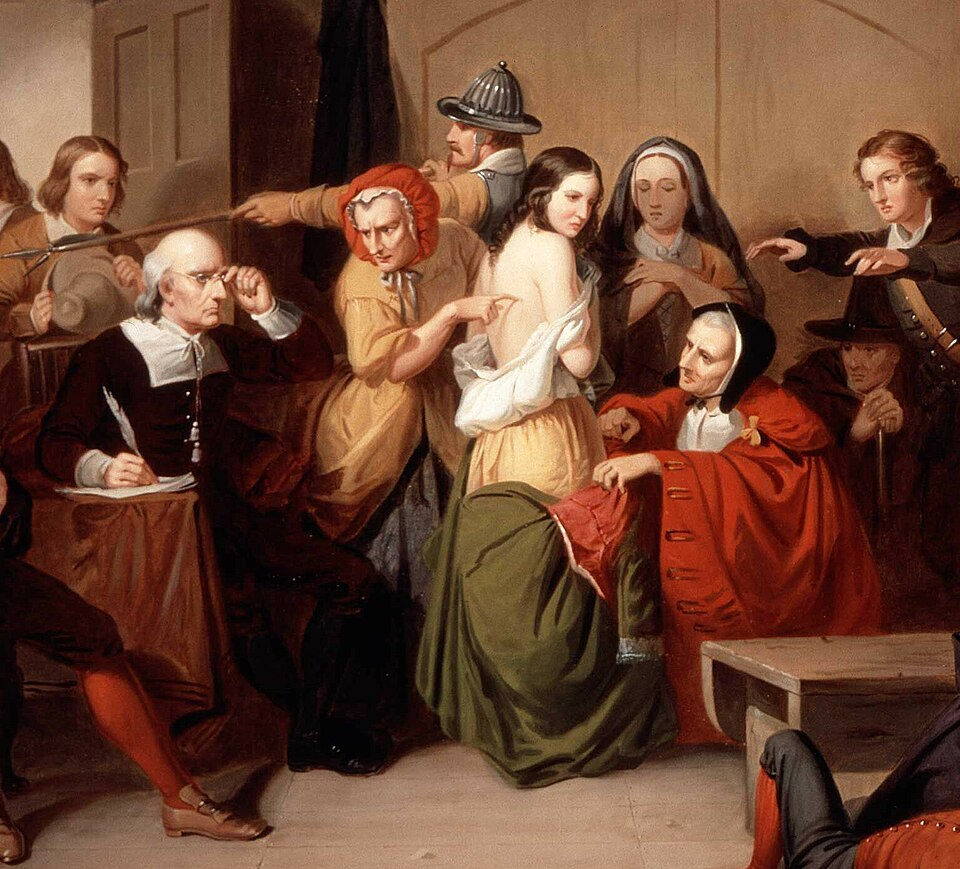
Warts come from the belief in the "witch's mark" (alternatively called the devil's mark)—a spot where a witch supposedly fed her demonic familiar, which may be a cat, toad, or some other animal. Professor Katherine Walker explains that the Malleus Maleficarum instructed examiners to search a suspect's body for any unusual mark to use as evidence (Yuko, “Why Do Witches Wear Pointy Hats? The History Behind the Costume”).
Helping to promote this witch stereotype are the films Snow White (1937)—the witch is shown as an old woman with a hunched back, beaked nose, and warts—and The Wizard of Oz (1939)—the wicked witch is a green-skinned black-clad lady with a prominent hairy wart in her chin (Bannatyne, Halloween: An American Holiday, pp. 136-137).
Why do witch costumes have pointed shoes?
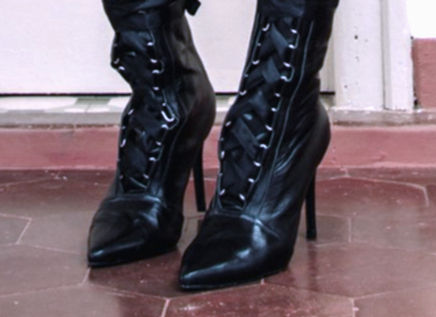
Pointed shoes called "poulaines" were trendy in Europe from the 14th to 16th centuries (Yuko, “Why Do Witches Wear Pointy Hats? The History Behind the Costume”). The church disapproved of them, seeing the long toes as phallic and believing they stopped people from kneeling to pray. Priests nicknamed them "Satan's Claws." It's uncertain when they became part of witch footwear. Pointed-toe boots were common women's fashion in the early 1900s, just as Halloween costumes were becoming popular in the U.S.
Why are witches usually pictured as old women?

Witchcraft writers of the 1400s and 1500s (specifically, Johannes Nider and Heinrich Kramer), believed women were more easily influenced by the devil, being "morally weaker than men," and older women were considered especially vulnerable—oftentimes they were physically sick and couldn't defend themselves well against charges. Over time, the iconography of the wrinkled, warty old "hag" developed, as seen in Albrecht Dürer's engraving Witch Riding Backwards on a Goat (around 1500). Of the women accused of witchcraft, the majority were elderly, poor, and mentally troubled, according to Reginald Scot, an English writer (Scot, The Discoverie of Witchcraft, p. 5). At the time of Scot's writing his book The Discoverie of Witchcraft in 1584, the witch tropes were well-established.
Why do so many witches in fairy tales want to eat or harm children?
The idea comes directly from old witch beliefs. During the witch trials, authorities believed witches killed babies, especially the unbaptized infants, and used their bodies to make potions, including the ointment that supposedly let them fly. As Dr. Sledge explained, these accusations go back much further, to Roman slanders that early Christians practiced strange ritual worship and cannibalism—charges which Christians later used against heretics, Jewish communities (the blood libel), and witches (Sledge, “What is a Witch & Witchcraft?" timestamp 14:00+). Historian Mikki Brock added that since women were expected to nurture children, the witch was imagined as the complete opposite: a woman who harms or even eats them (Brock, "Historian Answers Witchcraft Questions," timestamp 16:52+). Few accusations could make a person seem more evil.
These beliefs and fears can be traced to ancient myths: the Greek figure of Lamia, a hybrid woman- serpentine demoness who preyed on and consumed children, and the Greco-Roman witch-bird creatures called the striges (singular strix). Striges were screeching owl-like witches who hunted people at night to eat them; in particular, they had fancied young children and babies (Hutton, pp. 69-71).

Fairy tales like Hansel and Gretel by the Grimms brothers in the early 1800s, carried these fears into stories told to children. They also worked as cautionary tales, warning children not to wander into the woods or trust strangers who offer food. Some scholars connect the trope to times of famine, when hunger and fear of starvation were real threats, though that link is harder to prove. Similar child-eating witches appear in other traditions too, like Baba Yaga in Slavic folklore, which suggests the fear of a monstrous female figure preying on children is ancient and widespread across cultures.
Why are witches associated with black cats?

This association is linked to the belief that witches had familiars, demon companion spirits, often taking the form of cats, dogs, rodents, toads, and other animals. Cats were among the most commonly named familiars, partly because accused witches, often poor women living alone in the countryside, kept them as household pets. Black cats, in particular, were connected to evil because black was associated with night, the devil, and black magic. Cats' own behavior added to their suspicious reputation: they're nocturnal, independent, creep around silently, and often seem to watch people intently.
Cats also had magical associations long before the witch trials. The Egyptians revered the cat goddess Bastet, the Norse goddess Freyja rode in a chariot pulled by cats, and the Norse seeress Thorbjorg wore gloves and a hood lined with catskin. Some later writers linked cats to Hecate, the Greek goddess of witchcraft. In the 19th century, Victorian Halloween cards paired the witch with her black cat, making the duo a lasting Halloween symbol.
What exactly is a witch's familiar?
A familiar is a spirit, usually believed to be a demon, that takes the form of a small animal and serves a witch. The word comes from the Latin familiaris, meaning "of the household." The belief was strongest in England and Scotland. As Dr. Justin Sledge notes, familiars are basically absent from continental texts like the Malleus Maleficarum, as beliefs in them are restricted to the "Anglo-Saxon sphere" (Sledge, "Witchcraft - Malleus Maleficarum - The Hammer of Witches," timestamp 24:29).
Familiars were believed to be granted to a witch by the devil after making a pact with him, and they could appear as cats, dogs, toads, rats, or even flies. In return for carrying out harmful magic, they were believed to feed on the witch's blood from a special teat or devil's mark. Witch trial records preserve many familiars' names, such as a cat named Satan belonging to Agnes Waterhouse, hanged in 1566, and Pyewacket and Vinegar Tom, recorded by witchfinder Matthew Hopkins in the 1640s. As both Donald Tyson and historian Mikki Brock point out, most supposed familiars were probably ordinary household pets (Tyson, p. 29; Brock, "Historian Answers Witchcraft Questions").
What were some famous familiars named in witch trials?
Vinegar Tom, a greyhound belonging to Elizabeth Clarke, was the most memorable familiar. Matthew Hopkins, a witchhunter (1645-1646), gleaned more familiar names: Holt (a white kitten), Jarmara (a fat legless spaniel), Sack and Sugar (a black rabbit), and Newes (a polecat), along with Ilemauzar (or Elimanzer), Pyewackett, and Peck in the Crowne (Tyson, p. 29). Trial records name even more familiars: Titty, Jack, Piggin, Tifflin, John/Jack, Crow, Tibb, and Rutterkin (Rosen, pp. 115, 133-134, 152, 359, 380-382).

Stories of women using familiars proved deadly. In 1566, a widow named Agnes Waterhouse from Hatfield Peverel, England, confessed to having a cat named Satan (or "Sathan") that she used to harm people's farm animals (Rosen, pp. 76-77). According to Agnes' daughter, Joan, in a confession at Chelmsford, Essex, the girl called out "Satan" around their house, as she had seen her mother do the same in the past, and from out of one of her mother's shoes under a bed, a large black dog came up to Joan and demanded to know what she wanted (ibid., pp. 77-81). After more confessions, Agnes was later hanged for witchcraft in causing a fatal illness ("the flux") to William Finney (ibid., p. 77), becoming the first woman to be executed in England under the Witch Craft Act (1563) .
Were Quaker women accused of witchcraft?
Sadly, yes. The Quakers, founded in England in the mid-1600s, held radical beliefs, including believing women and men were spiritual equals and that women could preach. Because they were seen as a threat, Quakers faced persecution and imprisonment. The women members, in particular, were accused of witchcraft. These accusations may explain why their tall black hats became linked to witches.
Who were the Waldensians, and how were they connected to witchcraft?
The Waldensians were a group of reformist Christians who followed the teachings of Peter Waldo, a wealthy merchant from Lyon who founded the movement in 1170. Waldo gave away his fortune and led a life of poverty. The Waldensians' criticism of the wealthy church led them on a path of excommunication, horrible persecution, and massacres. In the 1300s and 1400s, inquisitors accused the Waldensians of heresy and crimes of secret night meetings, devil worship in the shape of a goat, child murder, and flying through the air on sticks. All these crimes were later used against witches (Sledge, "What is a Witch & Witchcraft?", timestamp 6:35).
The earliest known image of women flying on brooms came from a 1451 manuscript of Martin Le Franc's Le Champion des Dames, which labeled them as Waldensian women. In short, the Waldensians were the bridge between the medieval concept of the heretic and the later idea of the witch.
Why is the devil shown as a goat?
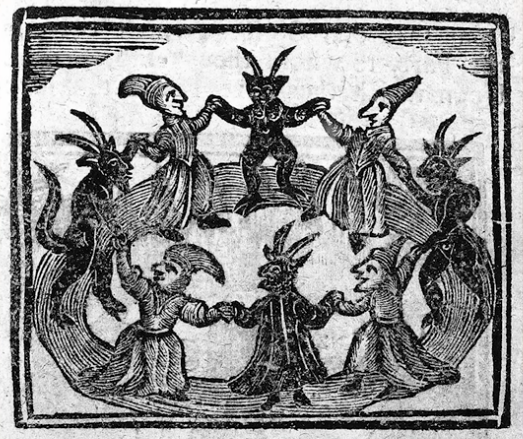
The black goat is an inversion of the Lamb of God, a Christian symbol for Jesus. Brock states that it also reflects the demonization of pagan figures like the goat-footed god Pan (Brock, “Historian Answers Witchcraft Questions,” timestamp 10:05). Sledge's video showed the same image appearing even earlier, in accusations against the Waldensians (Sledge, “What is a Witch & Witchcraft?,” timestamps 7:48, 8:18, 9:40).
Can men be witches?
Of course. About 75 to 80 percent of accused witches were women, but men were accused too. In a few places, including Russia, Estonia, Normandy, and Iceland, most of the accused were men, although these areas never had full-scale witch panics (Brock, "Historian Answers Witchcraft Questions", timestamp 0:22). Men were often accused because a female relative, such as a mother, sister, or wife, had been accused first, or because they didn't fit expected ideas of manly, "rational" behavior.
Why was torture used in witch trials?
Witchcraft was considered a hidden crime, happening through invisible magic with few or no eyewitnesses (Brock, "Historian Answers Witchcraft Questions", timestamp 2:30). Courts during these times normally required either eyewitness testimony or confessions. So the authorities had to rely on confessions. Witchcraft was seen as an "exceptional crime," meaning that it was considered to entail multiple crimes: treason against God (apostasy), devil worship (heresy and idolatry), and harming children, adults, farm animals, or crops. With this label of witchcraft as an exceptional crime, the normal legal limits for using torture to extract confession were often ignored (Levack, pp. 84-85, 259).
What were the torture methods used during the witch trials?
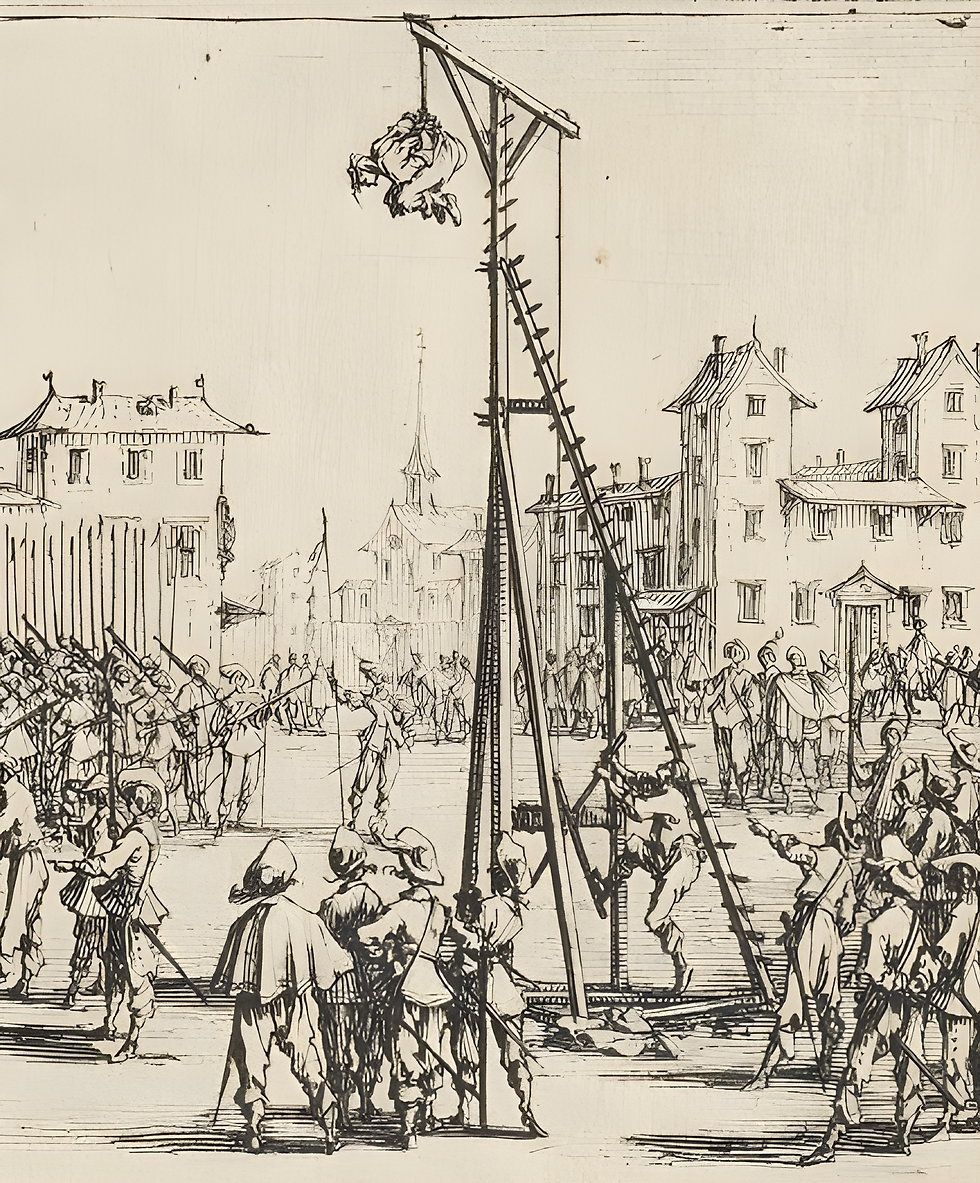
Common methods included thumbscrews, leg crushing boots ("Spanish boots"), sleep deprivation, the rack, and the strappado, a device where people were hung by the arms tied behind their backs. Other less common methods were head clamps, tourniquets, forced walking, starvation, isolation, watching the accused for days to see if familiars appeared, examining the accused's body for a devil's mark, and the swimming test (Brock, "Historian Answers Witchcraft Questions," timestamp 2:57; Levack, pp. 84, 86).
Torture produced unreliable information, which is why accused people confessed to impossible things like flying and meeting the devil. These heinous torture methods (some too awful to list) were employed despite the cruelty of the acts with the belief by the authorities that the witches may use sorcery to endure pain (Levack, p. 85).
Who was Giles Corey?
Giles Corey was a man accused of witchcraft during the Salem trials in 1692 after his wife, Martha, was accused. Because he refused to enter a plea, which English law required, he was pressed to death under heavy stones. According to Arthur Miller's play The Crucible, his last words were "more weight," though this is probably fictional.
Did the witch hunts happen in the Middle Ages?
Mostly no, which surprises many people. Brock stresses that most witch hunts happened in the early modern period, mainly the 1500s and 1600s, not the Middle Ages (Brock, "Historian Answers Witchcraft Questions," timestamp 5:06). The ideas behind them developed in the late medieval period, as the mass trials reached their height during 1550-1650 (Sledge, "Witches Witch-Hunting and Magic in Early-Modern Europe," timestamp 34:48).
How did people "test" whether someone was a witch?

One of the most famous witch tests was the swimming test, where an accused person was thrown into water to see whether they floated (a sign of guilt) or sank. People in these times trusted these tests—they believed God wouldn't let an innocent person be harmed. Brock notes that the swimming test was used much less often than popular culture suggests (Brock, "Historian Answers Witchcraft Questions", timestamp 6:06).
Other tests included prayer recitation (witches were believed to not be able to recite Scripture and prayers), touch tests (witches have power over a bewitched person going into fits and the witch's touch would release the afflicted's fits), baking a witch cake (urine from the accused is used as an ingredient for the cake, which after baking, is given to a dog, who, in turn, would fall under the witch's spell [or not] and identify the person), and presence of witch's marks on the accused person (Andrews, "7 Bizarre Witch Trial Tests").
Why did witch trials happen in so many places at the same time?
The main reason was the printing press. From the 15th century on, printed books on demons and witchcraft spread demonological ideas across Europe and to the colonies, so a story about witches in Scandinavia could be read in London or Boston. This created a fairly consistent Western image of the witch stereotype (Brock, "Historian Answers Witchcraft Questions," timestamp 7:03).
How did someone end up accused of witchcraft?
Typically, a misfortune would occur, such as a cow dying, a child getting sick, or a husband becoming impotent. People would then remember a past argument with a neighbor, especially with someone vulnerable—a widow, a poor woman, or someone who was bad-tempered or skipped church—and blame this neighbor for the bad event (Brock, timestamp 28:56-30:50).
The "wronged" victim would bring up a formal charge to local authorities, such as town officials in Germany or a justice of the peace in England. The authorities would gather evidence by interviewing witnesses, who often described incidents from ten or more years earlier. The authorities would often employ "inquisitorial procedure" when collecting evidence (Levack, pp. 77-78). In larger witch hunts, many accused people, under torture or pressure, would name other people as witches or accomplices.
Why is Salem the most famous witch trial?
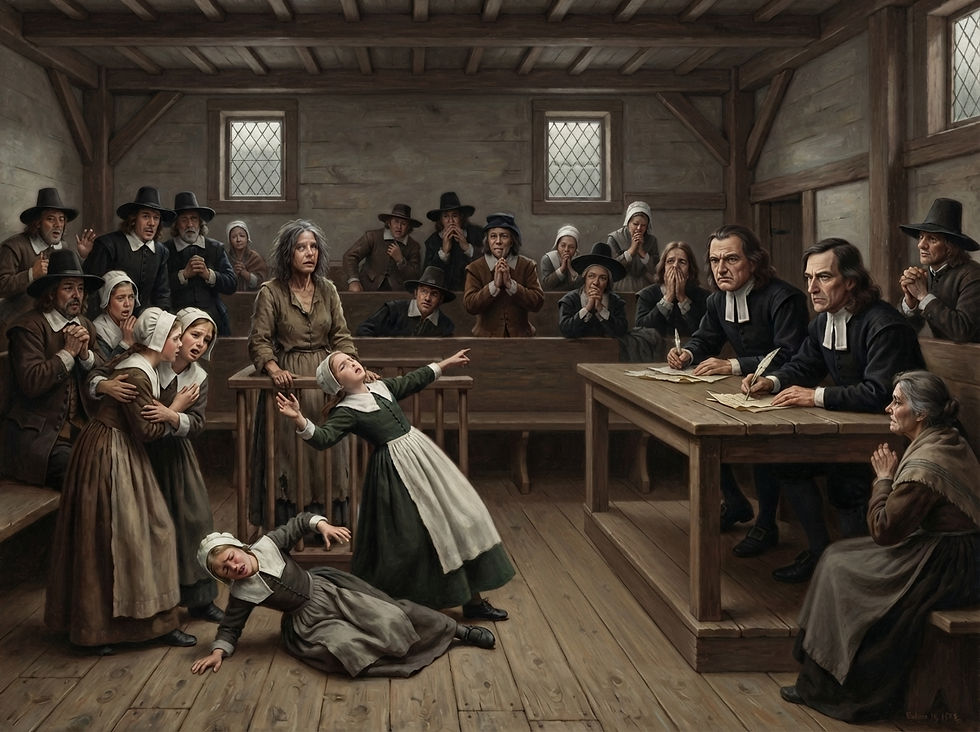
Brock gives several reasons: American cultural influence, the fame of Arthur Miller's play The Crucible (1953), and the shock that it happened so late, in the 1690s, during the scientific revolution in a colony often held up as a model society. In reality, Salem came near the end of a much larger European story (Brock, "Historian Answers Witchcraft Questions," timestamps 22:38, 24:45).
Another factor is that the Salem witch trials were well-documented—many court records survived. The trials were debated in print right away in books and pamphlets, like Cotton Mather's The Wonders of the Invisible World (1693) who justified the executions in defense of the Salem court. Mather's father, Increase Mather, who wrote Cases of Conscience Concerning Evil Spirits (1693) argued against convicting people on spectral evidence, which is based on testimony that a person's spirit had appeared and attacked someone. Later, Robert Calef's More Wonders of the Invisible World (1700) argued that spectral evidence was worthless, that the accusers were unreliable, and that innocent people had been put to death (Norton, pp. 272-274, chapter 8: 294-298).
Both opponents and defenders of the trials drew on more than a century of European witch trials and English writings. Some judges relied on English legal guides and precedents, while critics like Increase Mather and Sam Willard used earlier writers' arguments against spectral evidence. As a result, the Salem trials became one of the most documented and thoroughly-contested witch trials of its time.
Were the Salem witch trials caused by mass hysteria or ergot poisoning?

Historian Brock rejects both explanations. People at the time genuinely believed in witches, and in a world without modern medical knowledge, witchcraft was a reasonable way to explain misfortune. She also points out that there's no evidence for ergot poisoning (a fungus in rye bread that can cause hallucinations), and it couldn't explain centuries of trials across Europe. There just wasn't that much "LSD bread," according to Brock (Brock, "Historian Answers Witchcraft Questions," timestamp 26:10).
The ergot poisoning theory was first suggested by Linnda Caporael in 1976 (Caporael). But later that same year, psychologists Nicholas Spanos and Jack Gottlieb refuted that theory. They concluded that the key symptoms of ergot poisoning, e.g. cold and pale extremities, burning pain, gangrene, vomiting, and diarrhea, do not match those of the accusing girls' reported symptoms of bewitchment (Spanos and Gottlieb). Further, the entire households of the afflicted girls ate the same rye bread, but only one or two people per household became ill (Spanos and Gottlieb). This pattern is too selective to indicate true sickness from ergot poisoning. Epidemics of convulsive ergotism occurred "almost exclusively in locales where the inhabitants suffered severe vitamin A deficiencies," writes Spanos and Gottlieb. The inhabitants of Salem were not likely to be suffering from vitamin A deficiencies because they lived in a farming community where there was a seaport nearby. Hence, there were plenty of dairy products and fish (sources rich in vitamin A) to be consumed.
What caused the Salem witch trials?

Several significant conditions were responsible for this dark stain in American colonial history. Salem's legal process was makeshift and grossly unfair: a special court was hastily set up to try the accused (Boyer and Nissenbaum, pp. 7-8). The accused had no defense lawyers. Spectral evidence was allowed. Spectral evidence is testimony that an accused person's ghost or "specter" had appeared to a witness, often in a dream or vision, and attacked them. Since only the victim could see the specter, the testimony couldn't be verified by anyone else (ibid., pp. 17-19). Confessions from the accused were often extracted from torture. Many of the accused who confessed were spared, while those who didn't confess were executed.
Social factionalism played a role, in that Salem was divided into two camps, either with the Putnam or the Porter families. The accusers overwhelmingly came from the Putnam camp and their allies, whereas the accused people hailed from the Porter camp (Boyer and Nissenbaum, chapters 4 and 5). Politically, the colony was unstable and insecure. Massachusetts had lost its charter in 1682, and a new charter arrived in only May of 1692. The precarious political system left the colony unsure of its government and court system, not knowing if any of the old land titles were valid.
The ongoing King William's War caused repeated attacks and killings of settlers by the French and their Native American allies on the northern frontier, spreading fear and panic throughout the region (Norton, chapter 3, pp. 96-100, 108-109, 117-127). There were survivors who may have been suffering from PTSD due to the violence. Some of the girls lodging accusations, who suffered fits, convulsions, and delusions, may have been displaying PTSD symptoms. The religious fervor in the colony was another major contributor. Most of the colonists were Puritans, who strongly believed the devil was actively attacking their land and saw their personal misfortunes as the work of witches.
Together, these conditions fanned the hysteria and fears of witches working in their midst, spreading the accusations to regions beyond Salem village and Salem town, such as Andover, Topsfield, Beverly, Ipswich, and many other nearby towns.
When did the witch trials end?
The last formal witch trials happened in England in the 1680s, in Scotland in the 1720s, and in parts of Central Europe as late as the 1780s. Authorities became skeptical that witchcraft was real, and witchcraft laws were removed in the 18th century. Historian Brock warned that the habit of demonizing others with the same stereotypes (of devil worship, child murders, etc.) still continues. In other words, witch hunts have never truly ended (Brock, timestamp 37:00).
Drawing From Treasure Trove

Now that we got much of the pesky little questions answered, we can move onto more details about the origins and history of witches and magic. If you have any questions on witches that were not answered in the FAQ, please comment below. I shall try to find a good answer to the question.
Having numerous resources on a subject, whether it be in literature, videos, films, and other media, is like discovering paradise—when it comes to doing proper research. However, it does take time to comb through the vast resources to find quality information. We shall sleuth our way through the maze of unverified claims and sensational tales of witches to a more solid ground of credible facts and educated theories concerning these practioners of magic.
By Mel Bridges
References
Andrews, Evan. "7 Bizarre Witch Trial Tests," history.com, Mar 18, 2014.
Bailey, Michael D. Battling Demons: Witchcraft, Heresy, and Reform in the Late Middle Ages, Penn State University Press, 2003.
Bailey, Michael D. Historical Dictionary of Witchcraft, Scarecrow Press, 2003.
Baker, Ellie. "Witch Perspectives: Burning Down the Old Standards," The PIT Journal, 2018. https://pitjournal.unc.edu/2023/01/05/witch-perspectives-burning-down-the-old-standards/
Bannatyne, Lesley Pratt. Halloween: An American Holiday, An American History, Pelican Pub. Co., 1998. https://archive.org/details/halloweenamerica0000bann/page/30/mode/2up?q=witches
Boyer, Paul and Stephen Nissenbaum, Salem Possessed: The Social Origins of Witchcraft, Harvard University Press, 1974.
Caporael, Linnda R. “Ergotism: The Satan Loosed in Salem?: Convulsive ergotism may have been a physiological basis for the Salem witchcraft crisis in 1692,” Science, Apr 2, 1976, Vol 192, Issue 4234, pp. 21-26.
Dürer, Albrecht. "Witch Riding Backwards on a Goat: Overview" (engraving 1501-1502), Museum of New Zealand, https://collections.tepapa.govt.nz/object/36635?page=1&rtp=1&ros=1&asr=1&assoc=all&mb=c
Edwards, Phil and Estelle Caswell. "The Hallucinogens That Might Have Sparked the Salem Witch Trials," Vox, Oct 29, 2015.
Evans-Pritchard, E. E. Witchcraft, Oracles and Magic Among the Azande, Oxford: Clarendon Press, 1937. https://archive.org/details/witchcraftoracle0000evan_d5h2/page/n9/mode/2up
Hults, Linda C. The Witch as Muse: Art, Gender, and Power in Early Modern Europe. University of Pennsylvania Press, 2005.
Hutton, Ronald. The Witch: A History of Fear, From Ancient Times to the Present, Yale University Press, 2017.
Kramer, Heinrich and Jacob Sprenger. Malleus Maleficarum, London: John Rodker, 1928.
Levack, Brian P. The Witch-Hunt in Early Modern Europe, 3rd ed., Pearson Education Limited, 2006.
Molitoris, Ulricus. De Lamiis et Phitonicis Mulieribus ("Of Witches and Women Fortune Tellers"), Reutlingen: Johann Otmar, 1489. https://archive.org/details/delamiisetphiton00moli/page/n53/mode/2up
Nider, Johannes. Formicarius, George Peabody Library, 1436-1438. https://archive.org/details/gpl_1839756/page/n23/mode/2up
Norton, Mary Beth. In the Devil's Snare: The Salem Witchcraft Crisis of 1692, New York: Vintage Books, 2002.
O'Brien, Darren. The Pinnacle of Hatred: The Blood Libel and the Jews. Jerusalem: Hebrew University Magnes Press, 2011.
Rizzo, Johnna. “How Broomsticks, Cauldrons, and Pointy Hats Became Essential Witch Gear,” National Geographic, October 25, 2024.
Rosen, Barbara, editor. Witchcraft, New York: Taplinger, 1972.
Rzesa, Ally. “Why Halloween Costumes Like Witch, Ghost and Vampire Have Endured,” The Boston Globe, Oct 31, 2025. www.bostonglobe.com/2025/10/31/arts/history-of-halloween-costumes/
Russell, Jeffrey Burton. Lucifer: The Devil in the Middle Ages, Cornell University Press, 1984.
Scot, Reginald and Nicolas Brinsley, editor. The Discoverie of Witchcraft, London: Elliot Stock, 1886 (reprint of first edition, originally published in 1584).
Spanos, Nicholas P. and Jack Gottlieb. “Ergotism and the Salem Witch Trials,” Science, Dec 24, 1976, Vol. 194, Issue 4272, pp. 1390-1394.
Tyson, Donald. Familiar Spirits: A Practical Guide for Witches & Magicians, Llewellyn Publications, 2004.
Yuko, Elizabeth. “Why Do Witches Wear Pointy Hats? The History Behind the Costume,” History.com, October 4, 2023.
Zika, Charles. The Appearance of Witchcraft: Print and Visual Culture In Sixteenth-Century Europe, New York: Routledge, 2007.
Videos
Brock, Mikki. “Historian Answers Witchcraft Questions,” WIRED, Oct 31, 2024, https://www.youtube.com/watch?v=NbPH9TcrRl4&t=686s.
CamiiW, "I Read 'The Witches' Hammer' So You Don't Have To!", CamiiW, Feb 10, 2022, https://www.youtube.com/watch?v=mTOs-KGSiNg.
Gosden, Chris. “The History of Magic, by Professor Chris Gosden,” School of Archaeology Oxford, Nov 2, 2020, https://www.youtube.com/watch?v=cA7pr7Jh02A&t=12s.
Sledge, Justin. "Witchcraft - Malleus Maleficarum - The Hammer of Witches - History and Analysis of the Inquisition," Esoterica, Oct 8, 2021. https://www.youtube.com/watch?v=uIdcjeeYjaE.
Sledge, Justin. “The Witch and Witchcraft in Popular Demonology - Foundational Depictions of Witches in Early Print,” Esoterica, Oct 14, 2022. https://www.youtube.com/watch?v=2MgxgurwMYA&list=PLZ__PGORcBKy2vWrrs3WEg4NnPviN9w7j&index=12.
Sledge, Justin. “What is a Witch & Witchcraft? The Formicarius of Johannes Nider,” Esoterica, 2025. https://www.youtube.com/watch?v=y0b3sOo4WGQ&t=840s.

Comments