


Mystical Creatures: the Dark Origins and Myths of Fairies
- 6 hours ago
- 10 min read
Fairies have enchanted human imagination for centuries. These mystical creatures appear as many variations in countless stories, legends, and folklore spanning the world. Yet peel back their whimsical surface, and their origins reveal something darker—a tangled history far more complex than the charming beings we think of today.
Let's dig into the roots of these magical creatures. We'll find a disturbing yet fascinating fusion of tragic folklore, myths, and scary beliefs.
What Exactly Are Fairies?
We should first define who and what we are talking about.
Fairies are supernatural beings who typically take human-like form, possess magic, dwell in hidden worlds, and remain morally ambiguous. This umbrella term stretches surprisingly wide—encompassing everything from quiet nature sprites in the woods to powerful deities like the shaitan ruler Iblis, and from benign little people who keep to themselves to monstrous figures like the Nuckelavee.
Fairy Classification
Since fairies encompass such a vast array of creatures, we'll organize them into categories for easier learning. Here's a classification of fairies from different regions, divided into three major groups based on their temperament toward humans.
Benevolent / Helpful Fairies
Fairies inclined to aid humans, especially in exchange for respect or offerings
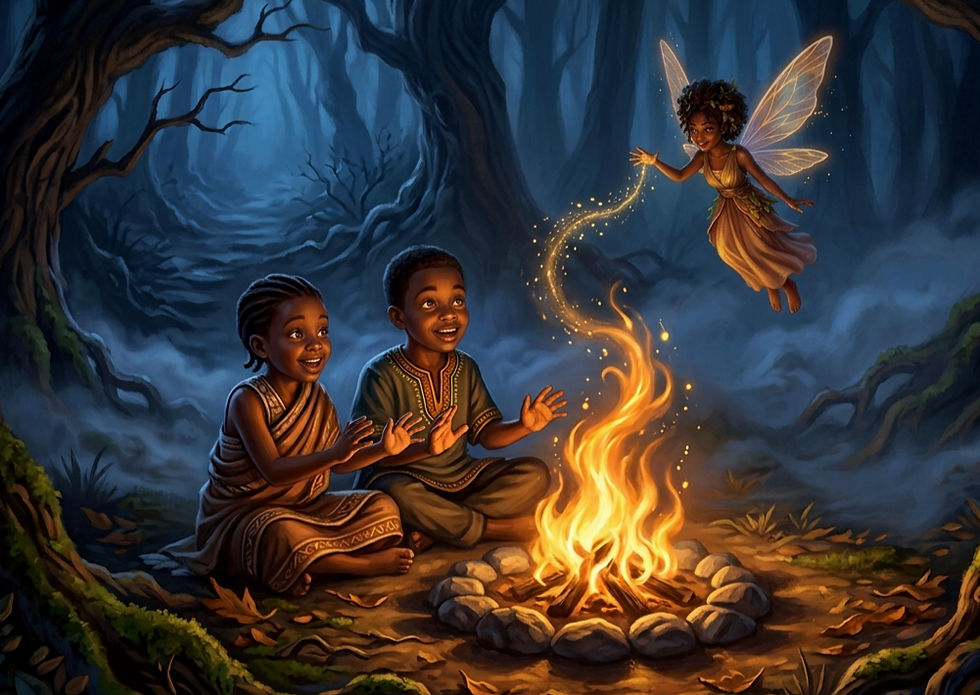
Aziza: small forest spirits who teach humans fire and magic. (West Africa/Dahomey)
Brownie: household spirits who do chores at night for cream or bread; deserts the house forever if given clothing or mocked. (Scotland/England)
Coblynau: similar mine-guardian spirits, knock on rock to indicate ore. (Wales)
Domovoi: house spirit who protects the family and home. (Slavic regions)

Knockers: mine spirits who warn miners, by knocking on walls, of cave-ins and danger. (Cornwall, England)
Nisse/Tomte: household guardian spirits who protect farms and livestock if treated well. (Scandinavia)
Pixies: fairy folk, sometimes miniature in size, who often living in the mounds and stone circles of moors; generally, more playful and mischievous than cruel. (England)
Yumboes: fairy-like beings who dance by moonlight and live in underground kingdoms beneath hills; generally friendly but not to be mocked or disrespected. (Senegal, West Africa)
Neutral / Ambiguous Fairies
Fairies capable of being both helpful and harmful depending on treatment — Capricious, rule-bound, or territorial
Abatwa: a race of extremely tiny people said to live among grasshoppers and anthills, invisible to most adults and only visible to children, pregnant women, or those with special sight; mostly shy and avoid human contact but can cause illness or misfortune, especially if disrespected. (Zulu South Africa)
Aos Sí/Sidhe: the noble fairy race descended from the Tuatha Dé Danann; their appearance is tall, beautiful, and dignified; organized in an aristocratic society structure, ruled by fairy kings and queens; power and temperament vary by encounter. (Ireland)
Banshee/Bean Sídhe (Irish)/Bean Sìth (Scottish): a female spirit whose name means "woman of the fairy mound," tying her to ancient burial mounds believed to be gateways to the Otherworld; the banshee serves as a harbinger of death—her mournful keening cry warns a family, often before news of the death has occurred; appears as a tall young woman with red, golden or silver hair and dressed in a white gown, or as a short, elderly woman with a green dress and gray cloak. ("The History of Fairies," time stamp 14:23) (Ireland, Scotland)

Chaneque: nature guardian spirits who punish trespassers in forests/rivers. (Mesoamerica)
Duendes: mischievous household/forest spirits, unpredictable but rarely truly malicious. (Latin America/Iberia)
Huldufólk ("Hidden People"): human-like beings, commonly dressed in old-fashioned Icelandic clothing, living in well-kept homes within rocks, cliffs, and hills; peaceful if undisturbed. (Iceland)

Leprechaun: bearded little men with a penchant for fashion, dressed in a fine green suit, hat, and buckled shoes; mostly solitary trickster guarding gold; often harmless unless provoked; from earliest sources, leprechauns were described as water sprites trying to drag a sleeping man underwater; not female. (Ireland)
Leshy: forest guardian, dangerous only to those who disrespect the woods. (Slavic regions)
Jinn/Djin/Genie: supernatural beings, often powerful, with free will, capable of good or harm depending on individual nature. (Middle East/Islamic tradition)
Pooka (Púca): shapeshifting trickster, sometimes helpful, sometimes deeply mischievous. (Ireland)

Selkies: seal-folk who can shed their skin to become human; more melancholic than menacing, associated with longing and transformation rather than malice. (Scotland)
Yōkai: huge umbrella of nature spirits and shapeshifters, morally variable by type; can appear in varied forms like animals, humans, nature, and Oni, which are evil and ogre-like with blue or dark skin, horns, and fangs. (Japan)
Malevolent / Dangerous Fairies
Fairies actively harmful to humans, often regardless of provocation

Baobhan Sith: vampiric fairy women, often seen with deer hooves, who lure and kill lone men; this creature usually targets hunters who have the fresh scent of blood on their clothes. (Scottish Highlands)
Bogs/Bogies/Boggarts: malicious household or shape-shifting spirits, closer to poltergeists in behavior, delighting in tormenting people. (Scotland)
Black Annis: iron-clawed, child-eating hag. (Leicestershire, England)
Grindylow: humanoid marsh-dweller who eats children who wander too near water. (Northern England)
Jenny Greenteeth: water-hag who drowns children who stray too close to ponds. (Northern England)
Nixie/Nix/Näcken/Nøkken: vengeful water spirits who live by rivers, streams or lakes and lure their victim by beauty, song or music, and then drag them underneath for a drowning death; usually appears as a woman. (Germany, Scandinavia)

Nuckelavee: A ghastly, skinless horse-and-rider hybrid associated with plague and death; pure evil and has no redeeming qualities; his mere breath alone would wither crops, sicken livestock, and bring drought to the land; the Nuckelavee's one weakness is fresh water—crossing a freshwater stream is a reliable escape from the monster. (Orkney, Scotland)
Peg Powler: similar drowning water-hag tied to the River Tees. (Northern England)
Redcap: murderous goblin who dyes his cap in victims' blood. (Scottish Borders)
Rusalka: vengeful spirits of drowned women who lure men to watery graves; most commonly appear as a woman who can walk and dance on land but in other regions, has a fish-tail or appear as doll-like beings or young men. (Slavic regions)
Sluagh/The Host: restless spirits of the unforgiven dead who hunt souls at night; may be fallen angels, the souls of unrepentant sinners, or the souls of unbaptized children; always an army of these spirits and not singular; frequently the flock flies through the air, especially gliding on the west winds. (Ireland, Scotland)
Alternate Classification System
Fairies are frequently classified into two courts, the Seelie or Unseelie Courts, depending on their level of benevolence or hostility toward humans. The Scottish term seely means blessed, lucky, or happy.
This Scottish-derived classification system is not as inclusive as the one used because it doesn't include other regional fairylike creatures. I decided to have it my way—because I can write about more fairies in an organized fashion.
The fairies originating in Scotland would be divided in the following list.
Seelie Court: Pixies, Brownies, Selkies, Daoine Sìth/Sidhe nobility
Unseelie Court: Redcaps, Bogs/Boggarts, Nuckelavee, The Host/Sluagh, Baobhan Sith
The Ancient Roots of Fairies
The notions of fairylike beings trace back to ancient Celtic, Norse, and even Roman mythology. These creatures were often connected to nature, magic, and the spirit world.
Belief in lares, penates, geniuses, and nymphs in Roman mythology, among many others creatures, bear striking similarities to fairies. The difference for the Roman fairy-like beings with Germanic and Celtic fairies is that they are not a separate race living in hidden worlds from humans. It was a state-mandated belief system—these beings were believed to literally control the abundance of the food supply for an individual, family, community, and even for the Emperor. So, Romans worshiped these fairies by having a house shrine and making daily offerings to them.
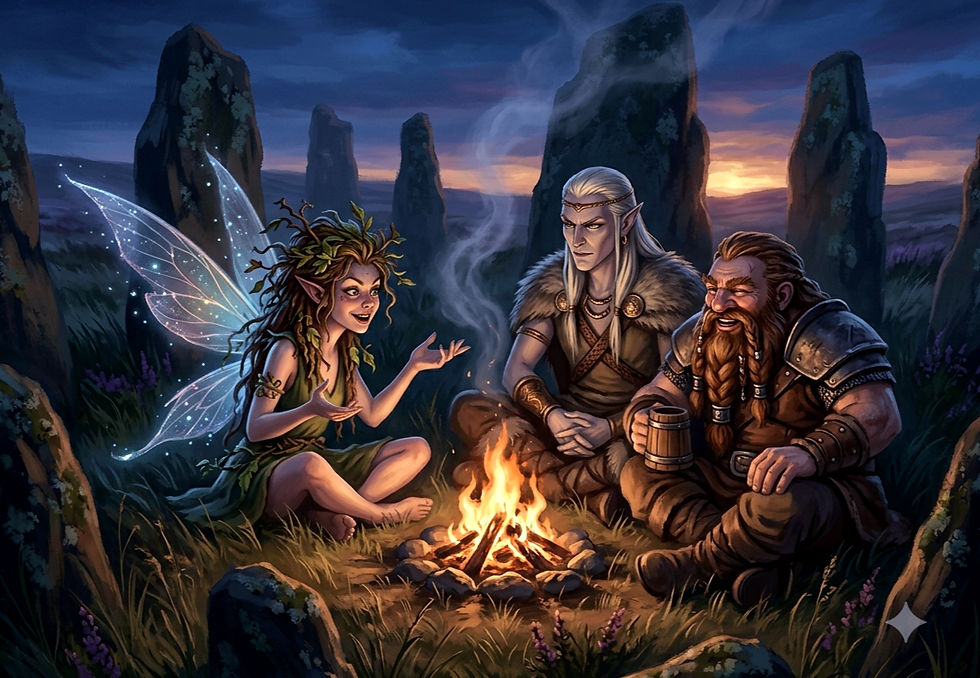
In ancient Celtic traditions, fairies were sometimes friendly, sometimes not. They were part of the Otherworld, a mysterious realm parallel to the human world. The Irish Tuatha Dé Danann were a race of gods in pagan mythology, associated with magic, craftsmanship, and sovereignty over the land.
Norse mythology features elves and dwarves, resembling fairies, tied to nature and fate. These creatures were often ambivalent, capable of helping or harming humans depending on their mood or how they were treated.
Digging Deeper: Fairies in European Folklore
Celtic Regions
Across the Celtic regions—Ireland, Scotland, Wales, Cornwall, the Isle of Man, and Brittany—fairy folklore imagines a parallel world alongside our own, as mentioned before called the Otherworld. This realm was home to beings like the Aos Sí/Sidhe ("the Good People") in Ireland, the Sìth in Scotland, and the Tylwyth Teg ("Fair Family") in Wales.
Far from being tiny winged sprites, these fae were tall, dignified beings tied to the land, dwelling beneath burial mounds, hills, and circles of standing stones. It should be noted that fae generally refers to human-sized and more ancient fairies—such as the types found in the Seelie and Unseelie Courts—with greater potential to harm humans.
Believed to be nature deities or spirits associated with air, water, woodlands, and other elemental realms, the fae folk expected the same respect and courtesy they offered in return. Disrespecting nature could bring illness or a curse down on the offender, so people left offerings of milk, butter, bread, and ale libations to appease these creatures and stay clear of their wrath.
When Christianity spread to Europe from the 5th century and on, the Celtic fairy folklore evolved. Within the Christian framework, fae folk were now considered fallen angels who were not righteous enough to be angels but not evil enough to be demons. They became a hidden race, retreating to the mounds, woods, and habitations not seen by humans.

Legends of changelings—where a kidnapped human infant is replaced by a fairy child—first developed during the medieval times and on. Methods to get the original baby back is to force the changeling to laugh or to torture the being. It's a dark side to fairy lore that perhaps people used to justify child abuse. (The History of Fairies, time stamp 4:28)
Fae folk still took offense at certain human behavior. When someone wanders too close to fairy rings, which are circular areas of mushrooms found in forests and fields where fairies danced, the hapless victim may be led astray ("pixy-led" in Cornwall) or lose track of time entirely. A single night of dancing could mean decades upon returning home.
Scandinavia
Across Norway, Denmark, and Sweden we have the Nisse, or the Tomte in Swedish tradition. The nisse is a small, gnome-like guardian spirit fiercely devoted to the fortune of a single farm, much like the English brownie. Appearing as an old man no taller than a child, tireless and shockingly strong, this spirit worked the farm and handled the barn at night to protect the livestock while the family sleeps. But cross him at your peril: the most famous ritual tied to the nisse is a bowl of julegrøt—warm porridge crowned with a pat of butter on top—left out as an offering, especially on Christmas Eve. Skip the offering, or worse, eat his butter yourself, and you'd better hope your livestock survive the winter.
The watery world in these regions hide something far more nefarious: the nixie. These seductive water spirits, often described as attractive women, haunt lakes, rivers, and streams, drawing the unwary toward the water's edge with beauty and song—only to pull them under to their deaths. Read the post Mystical Creatures: Dive into the Legends and Origins of Mermaids to learn more about nixies.
Further north, Iceland's Álfar carry an altogether grander legacy—elves bound up with fertility, ancestor worship, and old cosmic power. Far from fading into myth, they live on as the huldufólk ("hidden people"), said to walk in human form and dwell within rocks and hillsides. Even today, these people are spoken of with a lingering hush of respect rather than dismissed as legend.
Fairies Beyond Europe: Global Folklore
Fairy-like beings appeared in many cultures outside Europe, each with unique traits and stories.
The Slavic world speaks of Domovoi, household spirits that protect the home but can become vengeful if disrespected.
In African traditions, various spirits and magical beings, the Aziza and Abatwa among others, resemble fairies in their connection to nature and the spiritual world.
In Native American folklore, we have tiny nature spirits or tricksters, Yunwi Tsunsdi, Jogah, and Nimerigar, who influence the environment and human behavior.
Japan has the Yōkai, supernatural creatures that include small, magical beings similar to sprites. Some yōkai are playful, while others are malevolent spirits.
Thailand has Nang Mai, tree spirits linked to sacred trees, alongside Phi, a broad category of ancestral guardians and nature spirits held sacred by the Thai people.
The Philippines has similar fairylike beings: Diwata, nature spirits tied to forests and mountains, and Duwende, small dwarf-like earth spirits dwelling in mounds, trees, or termite hills.
In Hindu and Buddhist folklore across India, China, and other parts of Asia, Devas are powerful celestial beings who govern natural forces—sun, storm, fire, wind, and sky—and reside in heavenly realms. Yakshas, by contrast, have a dual nature: some traditions portray them as benevolent guardians of nature and treasure, while others describe fierce, even cannibalistic beings capable of harming travelers who disrespect the land.
Fairies in Literature and Popular Culture
Fairies remain popular characters in modern literature. Holly Black's The Cruel Prince and Tithe feature fairy characters drawn from the Seelie and Unseelie Courts, while Julie Kagawa's The Iron Fey series offers a YA take on the same Seelie/Unseelie court tradition. Neil Gaiman's Stardust is another popular novel built around fairy characters and the realm of Faerie.
In film and television, Disney offers the iconic modern fairy in Tinker Bell—originally Peter Pan's sidekick—who appears alongside her fairy friends across various animated films, and has evolved into a spirited, if occasionally petulant, magical character. The TV series, Once Upon a Time (2011-2018), brings Tinker Bell and Peter Pan into its shared fairy-tale universe across several seasons.
The Witcher (2019-Present; Netflix series) features elves portrayed as a displaced people, their name (Aen Seidhe) drawn directly from the Irish sídhe. In the films, Labyrinth (1986), Maleficent (2014), and The Green Knight (2021), each weave fairy and fae elements into their plotlines.
Fairies continue to appear across modern fantasy novels, TV shows, and films, often cast as protectors of nature or magical helpers. Yet many modern stories still hint at their older, more dangerous origins—keeping the ancient myths alive even as their image continues to soften for new audiences.
Final Remarks on Fairies
From the moorlands of Ireland and Scotland to the sacred groves of Thailand, fairy folklore takes countless shapes and tones. Across every culture, these beings carry the same underlying truth: Whether cheerful or dark, benevolent or vengeful, fairies embody nature itself—its beauty, its unpredictability, and its quiet demand for respect.
Their origin stories, passed down through offerings, warnings, and cautionary tales, ultimately teach the same lesson in different tongues: that greed, disrespect, and carelessness toward the natural world carry consequences, while humility and reverence keep a more harmonious balance between humanity and the unseen forces that shape it.
By Mel Bridges
References
(To come in the near future)


Comments